



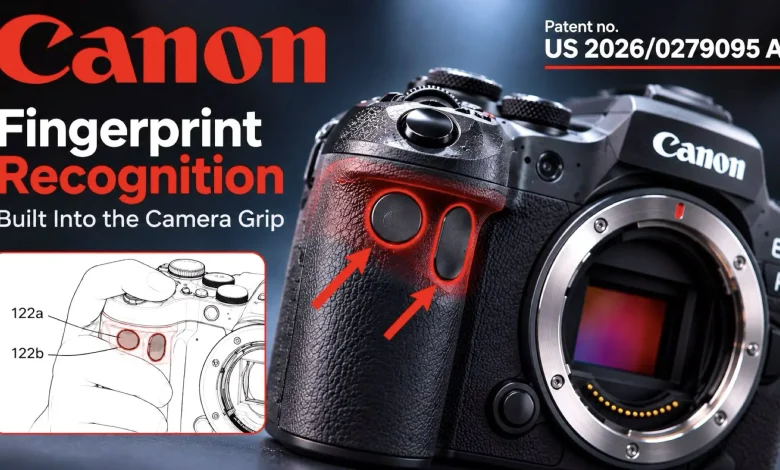

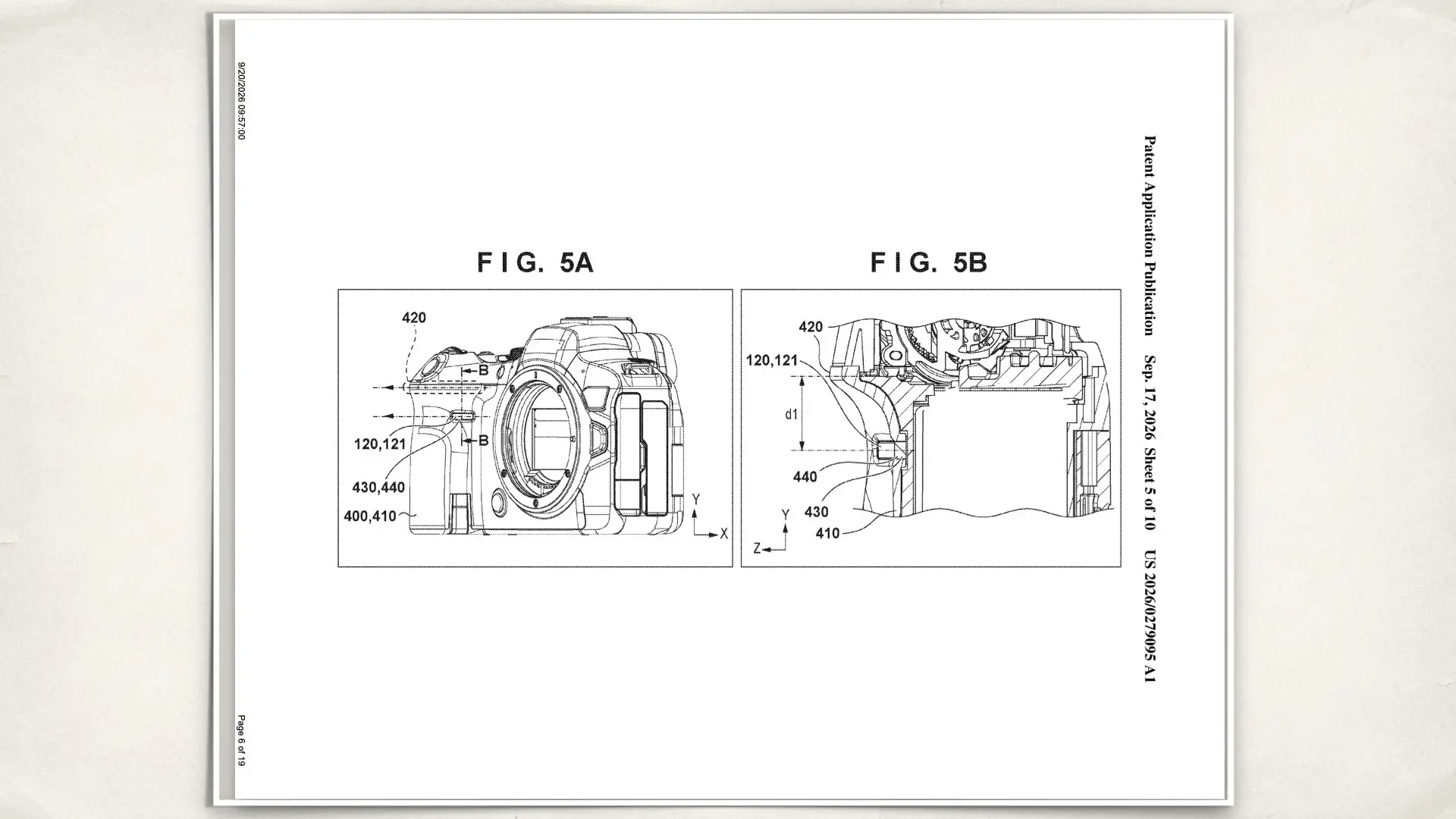
Canon has published a patent that explores an unusual idea for future cameras: fingerprint authentication built directly into the camera grip. The concept is not simply about adding a fingerprint reader somewhere on the body. Canon is designing the grip itself so the camera could recognize the person holding it while they are already in a normal shooting position. The patent, titled “Electronic Apparatus,” describes an interchangeable-lens camera with fingerprint sensors positioned around the front and rear grip areas. The goal is to authenticate the user without forcing them to move their hand, press a separate authentication button, or interrupt shooting.
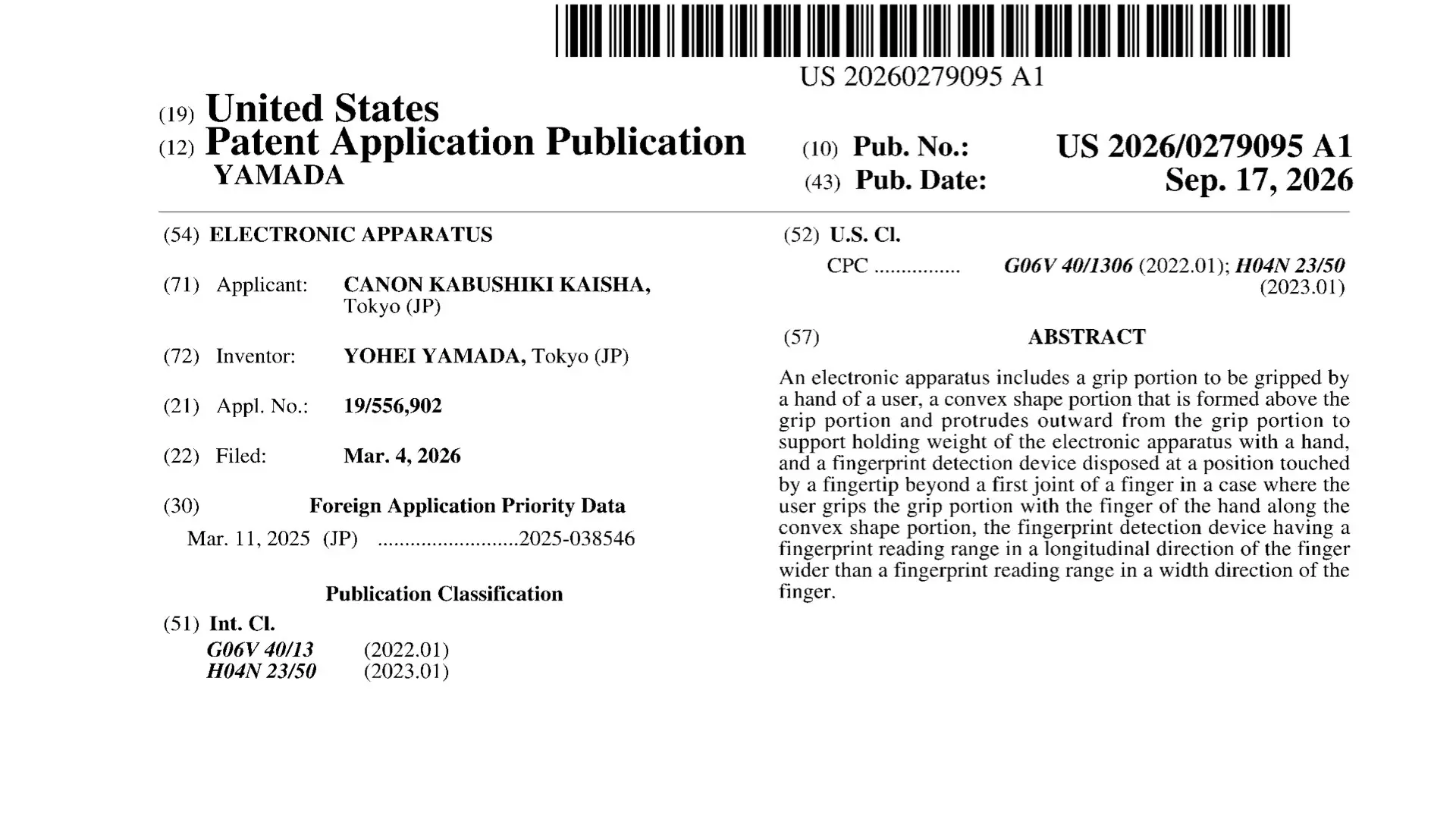
This creates a system that potentially understands two things: Is somebody holding the camera? And, using fingerprint authentication: Who is holding the camera? That distinction could become useful in professional environments.
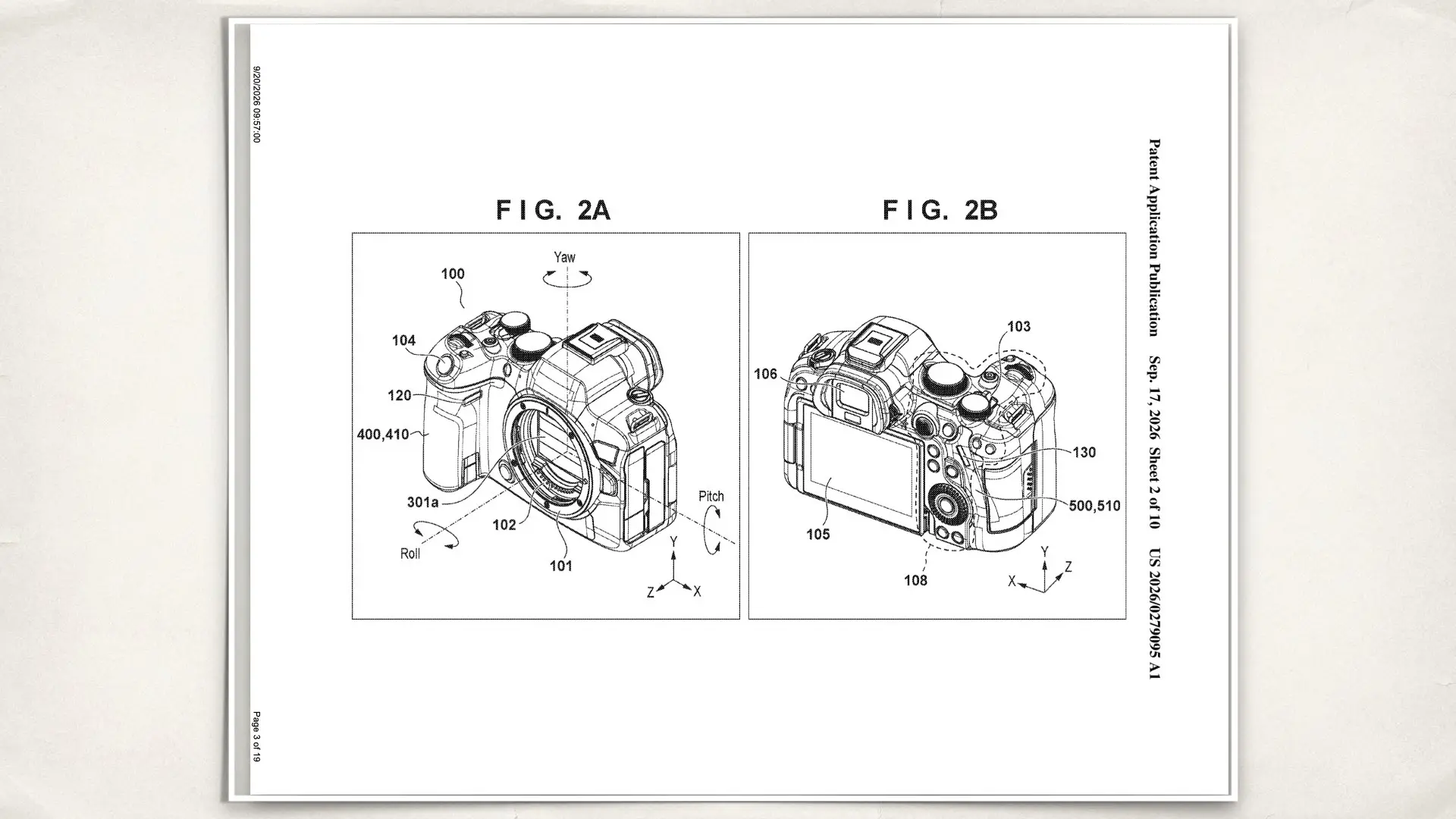
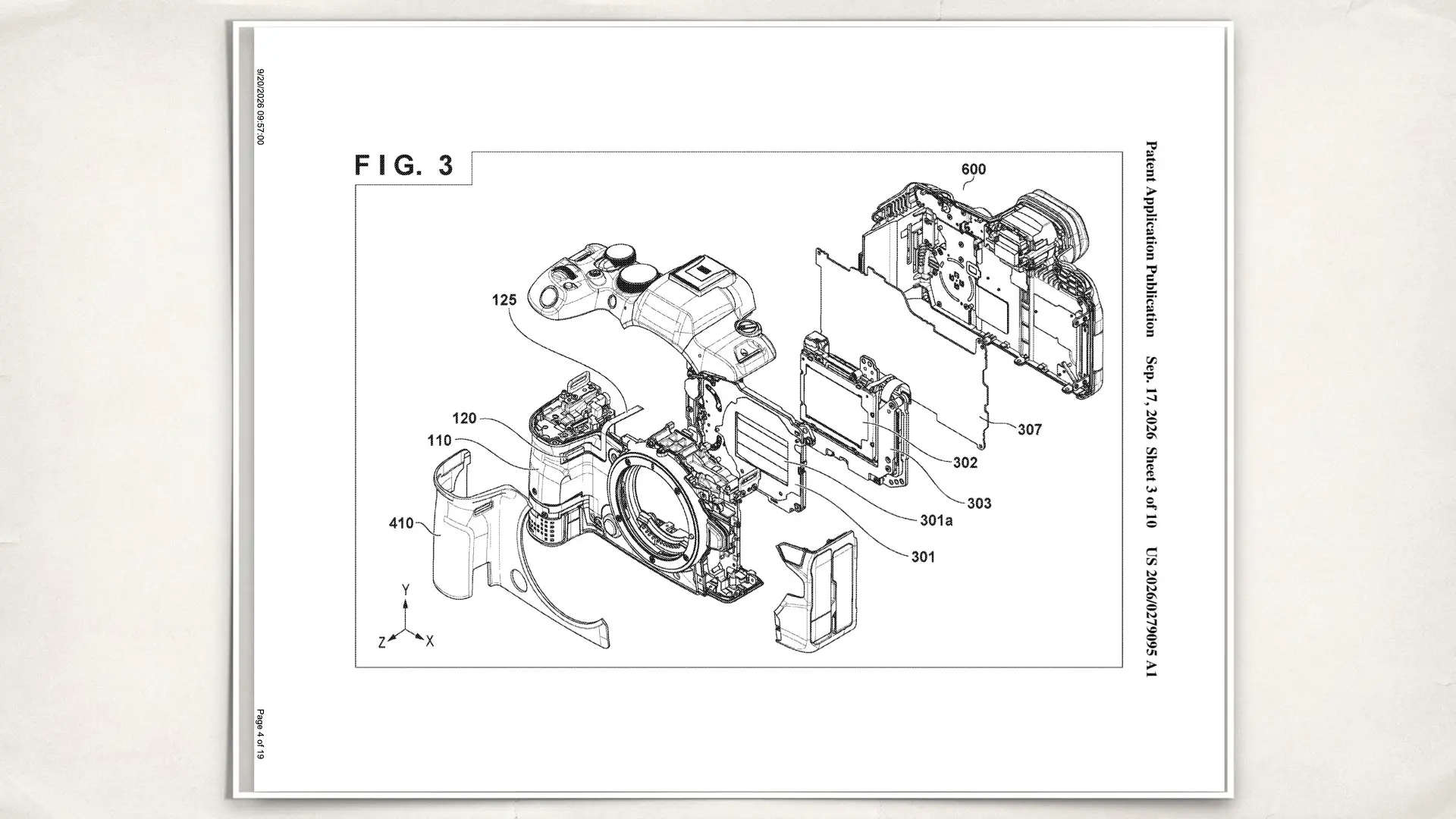
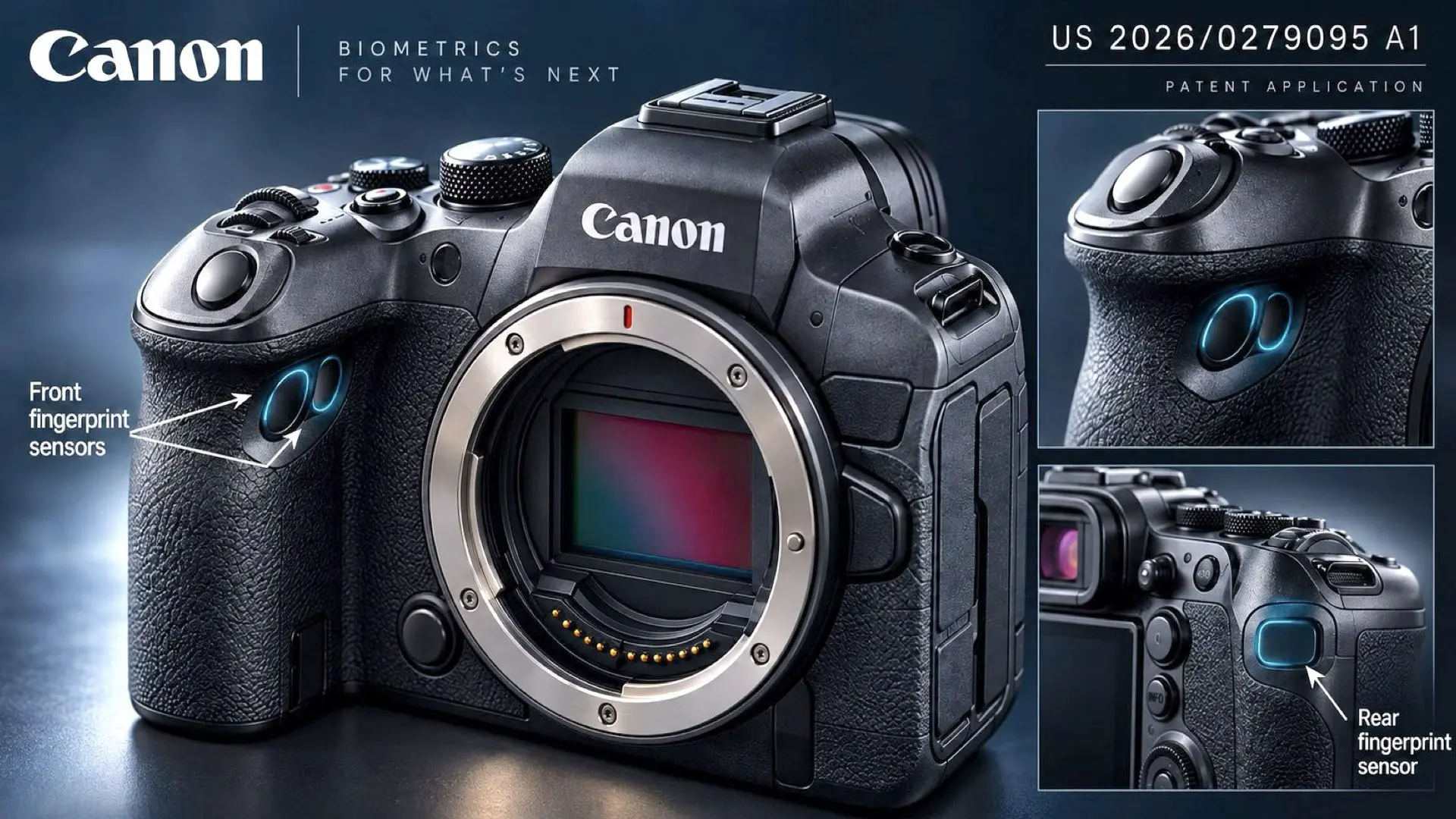
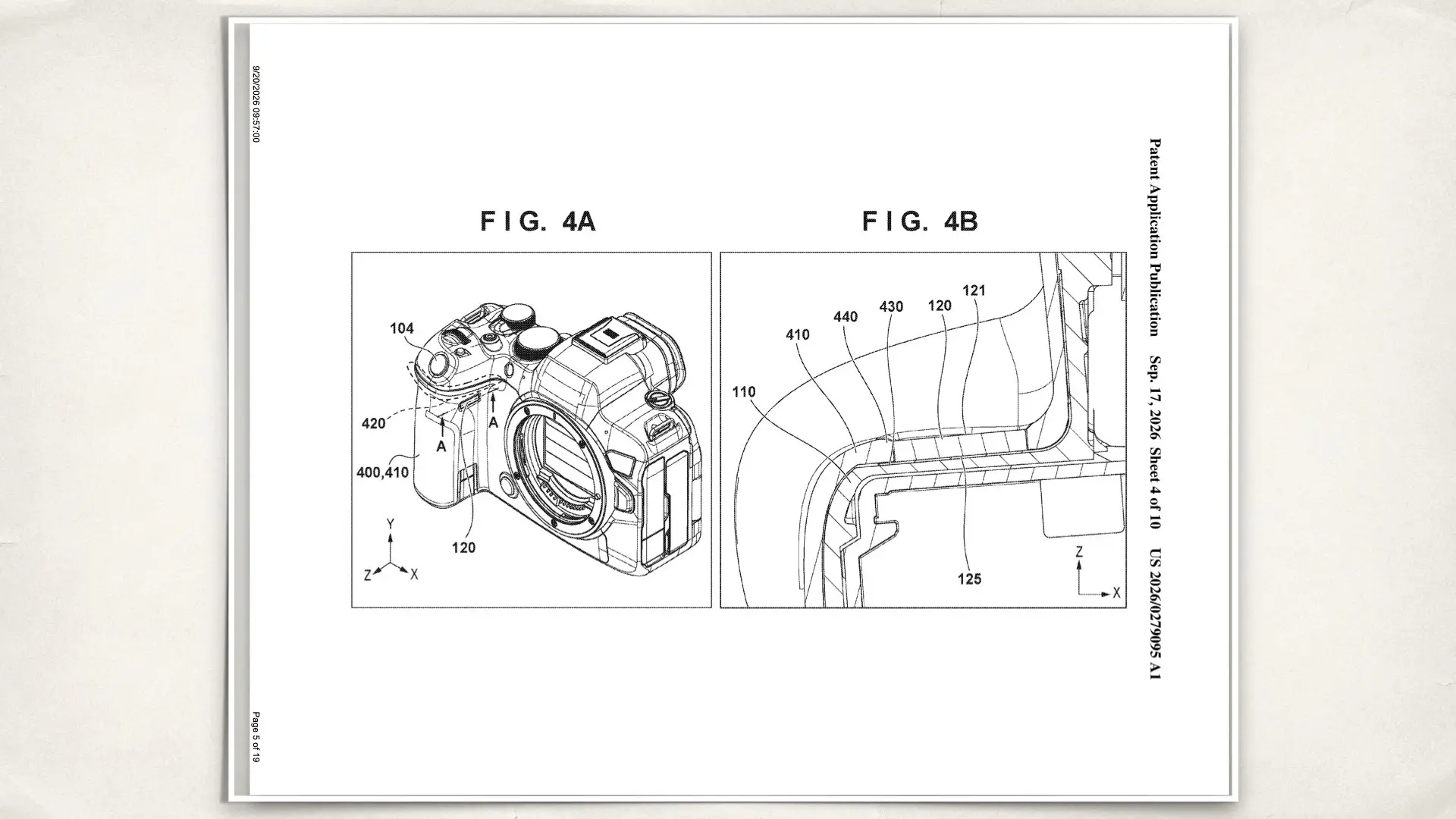
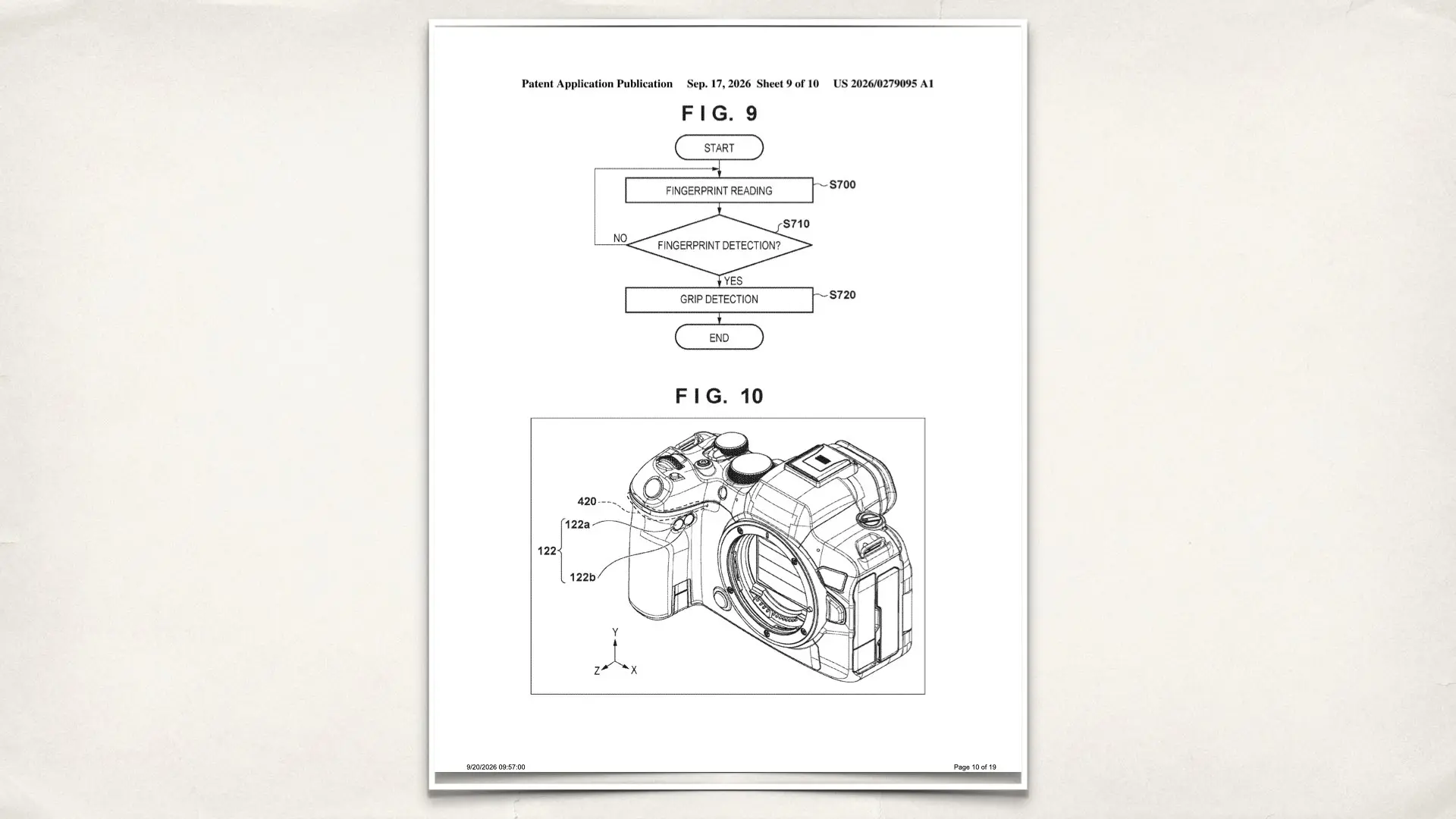
Canon’s drawings show a fairly conventional mirrorless camera body, but the grip contains additional sensing areas. One fingerprint sensor can sit on the front of the grip, around the area where the photographer’s middle finger naturally rests. Another sensor can be positioned on the rear of the camera where the thumb normally sits. Canon explains that fingerprint authentication already exists in previous camera-related technologies. The problem is that a small sensor placed in one fixed location may not work reliably for everyone. Different photographers have different hand sizes, finger lengths, and ways of holding a camera. Canon’s solution is largely about ergonomics. The front fingerprint sensor can be elongated in the direction of the finger. That gives the camera a larger area from which it can obtain a fingerprint, even when two photographers place their fingers slightly differently on the grip. Canon also describes designs using multiple fingerprint sensors positioned beside each other or placed at different angles. This could accommodate photographers who wrap their fingers around the grip differently. In other words, Canon is not asking the photographer to find the fingerprint reader. The fingerprint reader is being designed around the way photographers already hold cameras.
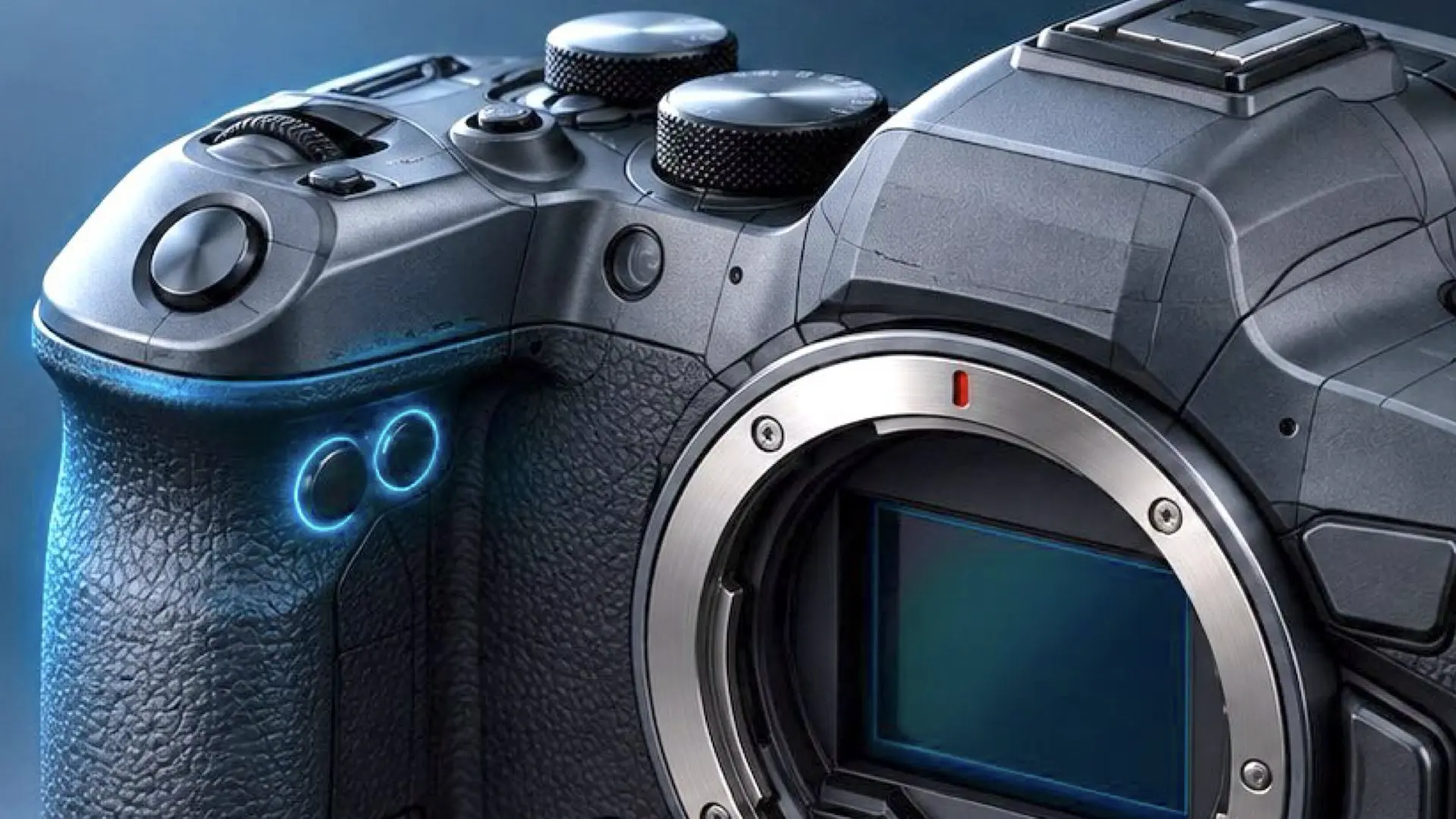
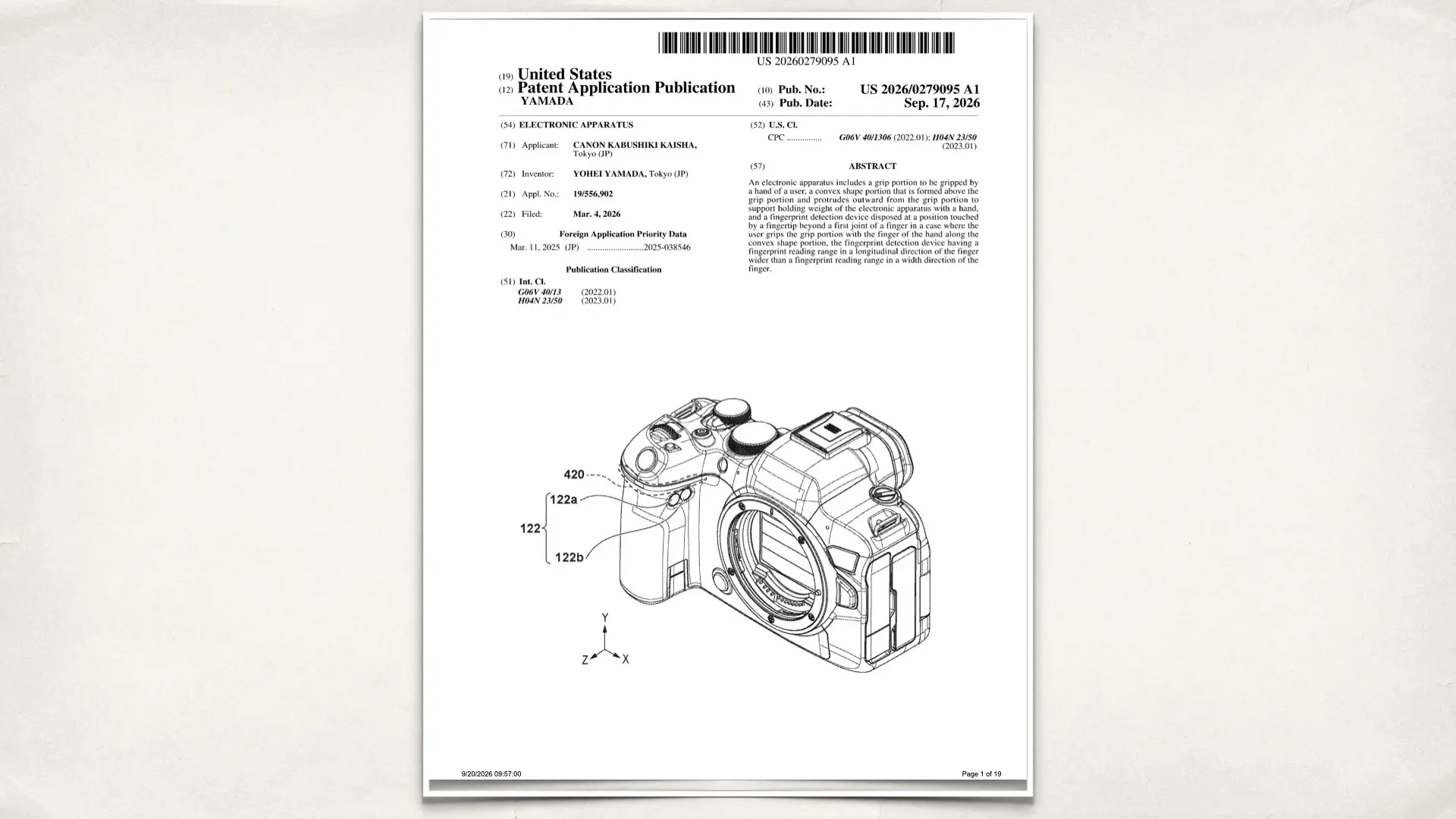
There is another interesting element. Canon describes using sensors on both the front and rear of the grip to determine whether somebody is actually holding the camera. The process shown in the patent is straightforward: the camera reads the sensors, detects fingerprint information and then determines that the camera is being gripped. Canon also says that one of these sensors could potentially be a pressure or optical sensor rather than a fingerprint sensor. This creates a system that potentially understands two things: Is somebody holding the camera? And, using fingerprint authentication: Who is holding the camera? That distinction could become useful in professional environments.
That would be an obvious possibility, but it is important to separate what Canon actually describes from what the technology could eventually enable. The patent focuses on fingerprint authentication, sensor placement and grip detection. It does not specifically say that recognizing a photographer would automatically load that person’s camera settings. Still, once a camera can identify its operator, personalized profiles become technically possible. A shared production camera could theoretically recognize different operators and associate them with different button assignments, monitoring preferences, autofocus configurations or other settings. Authentication could also have applications for rental cameras, shared studio equipment or productions where several operators use the same body. Those applications are possibilities rather than features claimed by this patent.
The concept would make the most sense on higher-end Canon bodies that may be used professionally or shared between operators. Potential examples include the Canon EOS R1 ($6,799 on Amazon), Canon EOS R3 ($4,399 on Amazon), Canon EOS R5 Mark II ($3,999 on Amazon), and Canon EOS R6 Mark II ($1,999 on Amazon). The Canon EOS R5 C ($3,199 on Amazon) is another particularly interesting example because it sits between Canon’s mirrorless and Cinema EOS ecosystems and is frequently used in professional production environments. This does not mean Canon is developing fingerprint authentication specifically for any of these models. The patent presents a general camera architecture, not a confirmed product roadmap.
That is ultimately what makes the patent interesting. Fingerprint authentication in electronics is nothing new. Canon’s idea is to make it essentially invisible to the photographer. Instead of touching a dedicated sensor, entering a password or navigating a menu, the camera could potentially authenticate its operator simply because that person picked up the camera normally. Whether Canon ever brings the technology to an EOS or Cinema EOS camera remains unknown. But the patent shows an interesting direction: a camera that does not just detect how it is being operated, but potentially recognizes who is operating it.
Source link